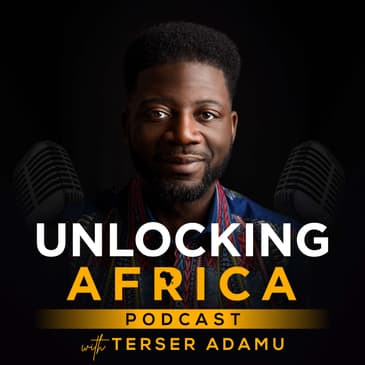
Episode 152 with Daniel Yu, who is the Founder & CEO of Wasoko and Co-CEO of their new merger with MaxAB.
African B2B e-commerce pioneers Wasoko and MaxAB have recently completed the continent’s largest-ever tech merger following the signing of preliminary terms in Q4 2023. Conducted as an all-stock transaction, the deal establishes a truly Pan-African platform for communities to access essential digital and physical goods, marking Wasoko and MaxAB’s evolution from B2B e-commerce companies to a multi-vertical ecosystem for Africa’s $600 billion informal retail sector.
About Wasoko:
Wasoko is the largest e-commerce platform serving informal retailers across Sub-Saharan Africa. Wasoko enables retailers to restock products for their businesses at any time via mobile app with free same-day delivery.
About MaxAB:
MaxAB is the pioneer and leading B2B e-commerce player in the Middle East and North Africa. In 2018, MaxAB established itself as an e-commerce platform that enables local underserved merchants and mom-and-pop shops in Egypt and Morocco to grow, increase their revenues, and improve their own quality of life.
What We Discuss With Daniel
- The major challenges encountered during the integration of two companies and how they were addressed.
- Key factors that drove the successful completion of the merger in under 60 days.
- How the merger is set to reshape the B2B e-commerce landscape in Africa and drive industry transformation.
- The merger's potential impact on boosting intra-African trade and promoting local sourcing initiatives across the continent.
- Key markets with the highest growth potential and the factors driving their promising outlook.
Did you miss my previous episode where I discuss Innovation, Leadership, and Technology: Canon’s Journey and Strategy for Africa? Make sure to check it out!
Like this show? Please leave us a review here -- even one sentence helps!
Connect with Terser on LinkedIn at Terser Adamu, and Twitter (X) @TerserAdamu
Connect with Daniel on LinkedIn a Daniel Yu, and Twitter (X) @wasoko_official
Many of the businesses unlocking opportunities in Africa don’t do it alone. If you’d like strategic support on entering or expanding across African markets, reach out to our partners ETK Group:
[00:00:00] You're listening to the Unlocking Africa Podcast.
[00:00:03] The vision has always been how do we become a truly pan-African platform that is transforming the lives of millions of shopkeepers and small businesses across the continent.
[00:00:16] Once your app is in their hand and they're seeing the power of what technology can do, what can then be unlocked from there in terms of turning that store into basically a pseudo-bank branch.
[00:00:25] The shareholders were very excited about what the combined company would unlock in terms of kind of reaching that next level of growth and scale together.
[00:00:33] Since rolling them out, we've seen significant improvements in the actual efficiency number of deliveries that a given vehicle can make per day.
[00:00:40] Stay tuned as we bring you inspiring people who are unlocking Africa's economic potential.
[00:00:47] You're listening to the Unlocking Africa Podcast with your host, Terser Adamu.
[00:00:55] Welcome to the Unlocking Africa Podcast where we find inspirational people who are doing inspirational things to unlock Africa's economic potential.
[00:01:05] Today, we have Daniel YU who is CEO and founder of Wasoko and also co-CEO of the new merger with Max AB,
[00:01:15] which is set to be the largest tech merger in Africa's tech space.
[00:01:20] Wasoko is a company that is transforming communities across Africa by revolutionizing access to essential goods and services by connecting small shops to the digital economy.
[00:01:32] Max AB is a company that is re-engineering the retail market by using propriety technologies, innovative supply chains,
[00:01:40] and embedded finance solutions to empower both retailers and suppliers.
[00:01:46] Welcome to the podcast, Daniel.
[00:01:48] How are you?
[00:01:49] Thank you.
[00:01:50] Thank you.
[00:01:50] It's a pleasure to be here.
[00:01:52] I am doing well, thanks.
[00:01:53] How is the relocation going since the merger?
[00:01:57] It's been great.
[00:01:58] I'm dialing in from Cairo, Egypt today.
[00:02:02] So I built up Wasoko primarily in East Africa.
[00:02:06] So spent the last eight, nine years down over there.
[00:02:10] But it's been a real pleasure getting to know better another part of the continent.
[00:02:15] And so very exciting to be part of the HQ office and team that we now have out of Cairo.
[00:02:23] Fantastic.
[00:02:23] And I'm excited to hear all about it.
[00:02:26] But before we get started, I was hoping you could give us an introduction about who Daniel Yu is.
[00:02:34] Of course.
[00:02:35] So I was born and raised in California, though I come from a multicultural background.
[00:02:41] So my father is originally from Hong Kong.
[00:02:44] I've got family in a few different places.
[00:02:45] And so I would say I was always interested in the world beyond the suburb where I grew up and in particular in global cultures.
[00:02:54] And that actually kind of manifested itself into even my university studies.
[00:02:59] And so when I was in school, I was doing both international relations as well as computer science, which is somewhat unusual combination.
[00:03:08] But I think actually kind of manifests well into what I'm doing today.
[00:03:13] And through that experience, I actually even got to spend some time abroad.
[00:03:17] I did an exchange program actually in the Middle East.
[00:03:20] Funny enough, I did an intensive Arabic study program, which has kind of come back to be quite helpful as I'm now living here in Egypt.
[00:03:28] And it was actually through some of those experiences that I got to know the reality of informal retail mom and pop stores across different emerging markets.
[00:03:40] And I started to actually observe even a lot of the challenges that these small stores face in just running their day to day business and accessing supply chains.
[00:03:49] So that international experience has led you to what you're doing, founding Wissoko, which has led to the merger.
[00:03:57] So if we can go straight into it, what actually inspired this huge decision to merge Wissoko and Max AB?
[00:04:05] Yes.
[00:04:06] What I'd say is, look, the vision has always been how do we become a truly pan-African platform that is transforming the lives of millions of shopkeepers and small businesses across the continent.
[00:04:22] And I think what we've realized is that to really, really fully achieve that scale, you have to work together.
[00:04:30] And, you know, that's, of course, there's the old cliche proverb, if you want to go fast, go alone.
[00:04:38] If you want to go far, go together.
[00:04:39] I think that applies equally in personal ambitions as well as in business ventures.
[00:04:45] And for us, we have built up Wissoko successfully across a number of different countries in East Africa.
[00:04:52] But as we looked to these other parts of the continent and we said, you know, realistically, are we going to be able to go into, you know, Egypt or Morocco or, you know, even Nigeria and, you know, execute at the same level of what we're seeing today in our markets?
[00:05:08] You know, or is it going to be a more fruitful path to, you know, potentially collaborate with players doing very similar things who are already there?
[00:05:17] I think what we realized is that the latter would actually be a much more productive option.
[00:05:21] And so that's ultimately the logic that drove the merger decision.
[00:05:25] So what have been some of the key challenges that you faced during the integration process of the two companies?
[00:05:33] On the challenges side, there have definitely been a lot of different things that have, you know, been part of the process that we've been figuring out overall, you know, both before and now after the transaction has closed.
[00:05:48] And so, you know, there's a lot of things that I think are you would expect in terms of, you know, just two different companies, two different organizations.
[00:05:56] You know, there are definitely, you know, some differences in terms of various processes across, you know, different departments and different operations.
[00:06:04] But you also do have, you know, the very real cultural differences as well.
[00:06:08] And I put that both in terms of the actual, you know, regional, you know, national cultures that are obviously different.
[00:06:17] The way things are done generally in Egypt, you know, are going to be very different from the way things are done generally in Kenya.
[00:06:22] But then you also have the company cultures, the corporate cultures.
[00:06:25] And I think, you know, what we've seen is both of those dimensions, you know, do require a lot of effort and a lot of, you know, explicit activity and support to ensure that, you know, any barriers or frictions can be overcome to ultimately building an effective, cohesive organization.
[00:06:47] And that definitely doesn't happen overnight.
[00:06:49] But, you know, it is very helpful.
[00:06:51] And, you know, this is, you know, for myself personally, even the fact that I have, you know, built up the organization Ground Up in East Africa, but also, you know, previously had that experience in the Middle East.
[00:07:06] You know, I've been able to come up, shift up to Egypt and really kind of embed myself and work with the local team here to kind of understand the way that they're doing things and support, you know, with any changes, you know, we need to make as well.
[00:07:20] You know, I think having individuals that are very comfortable in these multicultural settings is something that, you know, I definitely recognize is critical for this whole process.
[00:07:32] Despite the challenges, you've still managed to complete the merger in, I believe, under 60 days.
[00:07:38] What were the critical factors that actually enabled such a rapid integration?
[00:07:46] Yeah, I would say the integration period, as you mentioned, has actually been, you know, remarkably efficient in some areas.
[00:07:53] So I wouldn't claim that we finished all of our integration in 60 days.
[00:07:57] But in some areas, for example, like our technology platform, we actually were able to get that done, you know, in that period of time.
[00:08:05] And, you know, to give a sense of what enabled us to do that, I think was one, you know, a lot of planning and also intentionality around what is the end result that we want, right?
[00:08:19] And what we aligned on was, you know, we want the most effective platform, you know, going forward for the combined company.
[00:08:26] And so this is not a situation where the exact tech platform that you end up with needs to be, you know, 50% code, you know, from one company, 50% code from the other side.
[00:08:35] That would be, I think, a complete disaster to attempt to figure out.
[00:08:38] And so, you know, if you have your kind of North Star, which is, you know, fundamentally, what do we care about?
[00:08:44] We care about building that tan African company with millions of small businesses whose lives are being improved as a result of being served by our ecosystem.
[00:08:57] And if you have that as North Star, then, you know, all of these other small kind of day-to-day decisions where, you know, it could be easy to give into maybe some pettiness on like, oh, you know, well, we should do it this way because this is the way we've always done it.
[00:09:14] Or, you know, we're going to do it that way because, you know, this is, you know, better in this market than on that market.
[00:09:22] Like, if you can just kind of keep that perspective on stepping back and deciding what is actually best for the long term, then a lot of the friction that can otherwise come up in, you know, what are, you know, very challenging and tricky transactions and decisions, you know, a lot of that falls away because you're aligned fundamentally on the long-term goal of what you're trying to achieve.
[00:09:46] And that is ultimately what's going to be a guiding principle above all else.
[00:09:51] Looking outside of the, what I described as internal factors or friction points, were there any external factors such as regulatory or government hurdles that you had to navigate during the integration merger process?
[00:10:07] Thankfully, I'd say that the government and regulatory processes were relatively light for the transaction that we were undertaking.
[00:10:19] And, you know, part of that is that, you know, Maxab and Westoco actually did not have any overlapping operating markets.
[00:10:26] So, you know, we were not operating in Egypt.
[00:10:28] You know, Maxab was not doing anything in East Africa.
[00:10:30] So, your normal, you know, kind of competition authority reviews, which are primarily focused on, is there any kind of shift in the market power dynamics?
[00:10:42] So, is there a potential, you know, kind of monopoly in the making here?
[00:10:46] You know, that did not change because, as I said, there was no actual impact on any of the local operating market dynamics.
[00:10:54] And so, thankfully, that streamlined and removed, you know, a lot of the friction that otherwise could be there, you know, for other types of transactions.
[00:11:05] We did still, you know, kind of follow the full processes and, you know, get the sign-offs otherwise where they were required.
[00:11:14] But thankfully, it was not too onerous in our specific case.
[00:11:18] It sounds like you're making great progress with the whole integration merger.
[00:11:23] Are there any remaining key points or factors that are still outstanding with regards to the integration process?
[00:11:32] I would say not.
[00:11:34] No major activities that are outstanding.
[00:11:37] I mean, I think a lot of these things, you know, I mentioned some of the kind of cultural elements to how do you really build that new kind of combined cohesive team culture across all these different geographies.
[00:11:48] You know, that's going to be, you know, a long-term process of improvement and development.
[00:11:54] But otherwise, you know, the kind of major integration activities that, you know, one would be looking at, I'm thankful to say that those have pretty much all been dealt with as of today.
[00:12:07] Fantastic.
[00:12:07] So are you decided on a new name for the new entity?
[00:12:10] That is one of the last items that is still under development, but we'll let you know as soon as we have that ready to go.
[00:12:22] I'm looking forward to it.
[00:12:24] So if we look forward in terms of what you're hoping to achieve and the strategic vision, from your perspective, how do you believe this merger will reposition the B2B e-commerce space in Africa?
[00:12:39] I think what's been very notable about the combined company, and this is not just the result of the merger, but also I think as a result of the priorities and the product development that both companies have actually been working on, you know, even prior to the transaction,
[00:12:56] is that we have really evolved beyond being just an e-commerce company to really a B2B platform and full ecosystem.
[00:13:05] And what I mean by that is that actually, if you look at the financial services that we're offering, which is basically using the shop network that we built up through e-commerce that we've acquired, registered, you know, and built relationships, you know, data and trust with, you know, through that, you know, foundational first layer.
[00:13:30] And we've actually been able to dramatically grow these agent financial services such that in some markets, the volume of transactions that shopkeepers are doing on our platform actually exceed what they're doing with us on the e-commerce side.
[00:13:50] And so this has really been, I think, kind of transformative for us to see where, yes, e-commerce is what gets the foot in the door.
[00:13:58] That's what gets the shop to kind of adopt our digital platform in the first place.
[00:14:02] But then once you're there, once your app is in their hand and they're seeing the power of what technology can do in terms of being able to request and summon products to the doorstep with just a click of a few buttons,
[00:14:15] what can then be unlocked from there in terms of turning that store into basically a pseudo bank branch for their community?
[00:14:21] You know, that's what's really amazing to see be unlocked and actually kind of take hold.
[00:14:25] And so, you know, I think what this, you know, recognizes or realizes for our model and I think who we are in the ecosystem is that there are so many opportunities
[00:14:37] and there's so many layers to build out, you know, a transformative business that you start with this core point about building out infrastructure
[00:14:47] and building out a service that can actually acquire and set up, you know, in our case, you know, 200,000 mom and pop stores across five countries.
[00:14:54] And, you know, that might be expensive to do, you know, that might require a lot of investment.
[00:14:59] But once you're there, your ability to execute and layer in all these other services is extremely high potential.
[00:15:06] And so I think that's, you know, really how we're seeing our business.
[00:15:12] And also, I think it's going to be reflected in the impact and performance that we expect going forward as well.
[00:15:18] As you mentioned, you've evolved from being an e-commerce platform.
[00:15:22] I've seen a mention of this creating a multi-vertical ecosystem.
[00:15:28] Can you elaborate on what that means?
[00:15:32] Absolutely.
[00:15:33] So, you know, e-commerce, as I said, that's really kind of the first vertical.
[00:15:37] That's the first layer.
[00:15:38] And this is enabling the shops, you know, through our app to, you know, order the rice, soap, toilet paper, whatnot,
[00:15:45] get those products delivered to them next day free of charge.
[00:15:48] And as I said, that's the foot in the door.
[00:15:51] That's the onboarding mechanism for getting these 200,000 shops to download our app and actually start working with us in the first place.
[00:15:59] Now that that's in place, what we've been able to do is add in another menu, another portal within the same app that basically says,
[00:16:08] hey, do you want to be an agent to facilitate cash in cash out transactions in your community as well?
[00:16:16] So someone can come to your store and, you know, withdraw from M-Pesa or make a deposit into their Bank of Africa account or pay their electricity bill or top up their phone line.
[00:16:29] All of those transactions can now be facilitated by shops using our platform, using our app to serve their community.
[00:16:38] And so those agent fintech transactions have opened up a whole new set of revenue stream opportunities for the shops
[00:16:49] and improved the value and multi-service ability of those shopkeepers to the community as well.
[00:16:56] It's not just a place for you to go get your rice or your soap anymore.
[00:16:59] You can also go to the shop to do all these other things.
[00:17:02] And so I think that's, you know, the very, very clear example of, you know, that next vertical unlocking,
[00:17:08] you know, new value, new revenue streams, you know, for that shopkeeper and the community.
[00:17:14] The next key vertical that we've really seen a lot of traction and strong performance on is embedded finance.
[00:17:25] And so this is basically using, looking at the transactions, the business behavior that we're seeing with shops on both the e-commerce side and the fintech side.
[00:17:38] And basically saying, hey, these are, you know, small shops, you know, SMEs that are largely excluded from the formal financial ecosystem.
[00:17:48] They're not able to go to banks and get loans or lines of credit or whatnot.
[00:17:52] But, you know, for us, we actually built out this, all this unique proprietary data from the transactions that they're doing with us.
[00:18:00] And we can see that these are consistent businesses that have growth potential.
[00:18:05] And so why not step in ourselves and actually start to provide some of that financing to the shops?
[00:18:11] And that's, in fact, what we've been doing.
[00:18:15] And we're seeing incredible results on that part and really excited to grow out that embedded financing vertical as well.
[00:18:22] Fantastic. As you explained, the multi-vertical involves the e-commerce and the finance element.
[00:18:28] So what is the plan for balancing the growth of the e-commerce with the expansion of the fintech services?
[00:18:36] Will they be going in tandem or is it a different plan?
[00:18:40] I would say, you know, e-commerce is always going to be the foundation.
[00:18:44] That's always going to be the first layer of offering, you know, as we get into a new market, as we get into, you know, building out our merchant network in a given country.
[00:18:56] But once that is established, you know, then and we have enough data, we have enough, you know, merchants on the on the platform using the app.
[00:19:05] Then that's where we see, you know, where fintech can be very powerful to kind of quickly layer in and start to grow as well.
[00:19:12] On the e-commerce side, you know, we we are going to be, you know, getting deeper into our existing markets.
[00:19:19] You know, we are looking even at additional markets, you know, possibly through additional M&A transactions of how we can get there, how we can expand our presence, you know, to continue to be more and more of a pan-African platform.
[00:19:33] On the fintech side, we're still in the process of rolling out those services in all of our markets.
[00:19:39] So that's definitely a key priority for us as we get into 2025 and scaling out the platform there.
[00:19:46] Fantastic. As you mentioned, you're looking at other markets without disclosing too many company inside secrets.
[00:19:54] Are there any key markets that you believe hold the most potential for growth?
[00:20:00] I think there is a huge potential across the continent generally in our space.
[00:20:05] I mean, you know, there's over 10 million of these mom and pop stores selling over 600 billion dollars worth of essential goods to their communities.
[00:20:14] And so pretty much anywhere you look, you know, there's a there's an enormous market potential.
[00:20:18] You know, I would say for us, we're very keen on all of the key regions that were not yet present.
[00:20:24] And so, you know, actively doing our homework research to understand those markets,
[00:20:30] to evaluate the different players that might already be there, you know, for potential strategic partnership,
[00:20:36] as well as even organic expansion going in directly ourselves as well.
[00:20:42] Not giving away too much there, Daniel.
[00:20:47] Fantastic. I totally understand.
[00:20:50] But I mean, as an international trade professional, I'm keen to also understand, you know,
[00:20:55] how this merger will potentially influence intra-African trade and also stimulate local sourcing.
[00:21:04] Absolutely. Absolutely.
[00:21:05] So this is definitely a key area for us.
[00:21:09] We're proud to say that the vast majority of the brands of the suppliers that we work with are actually local African brands
[00:21:19] that are manufacturing and serving their own markets.
[00:21:24] At the same time, we do see actually significant opportunity to drive more intra-Africa trade.
[00:21:31] So working with brands that might be present in one market or certain products and actually helping them to export to other African markets.
[00:21:40] And so a clear example of this would be actually tea.
[00:21:44] So as it turns out, you know, Egypt, which is a major tea drinking country, about 90 percent of that tea originates in Kenya.
[00:21:52] However, historically, the Maxab operation in Egypt has just been sourcing and procuring the tea from importers.
[00:22:03] However, given we have this very strong presence, you know, roots, you know, on the ground in Kenya now with the combined company,
[00:22:11] what we're looking at is, you know, can we in fact go to the source, you know, work with farmers or collectives, you know, in Kenya to actually kind of source tea according to the Egyptian tastes,
[00:22:25] you know, specifications, do the packaging and then take that that that tea, you know, from from the source in Kenya and actually export it within the group up to Egypt to directly supply our operations there.
[00:22:39] So these types of cross border intra-Africa opportunities we're extremely excited about.
[00:22:45] And this is just one of the things that the merger has been unlocking for us as well.
[00:22:49] Thank you for that. I guess as part of this expansion and increased intra-Africa trade, it does require a substantial workforce.
[00:22:58] You currently have a combined workforce of over 4000 employees.
[00:23:02] That is correct.
[00:23:02] So how do you manage or enable innovation and also maintain productivity post merger is such a substantial workforce?
[00:23:13] I would say we we've definitely been very intentional about our organizational structure, whereby each local entity,
[00:23:22] each local subsidiary is quite autonomous with its own leadership, its own management that is able to make their own decisions on what's best for that business locally.
[00:23:35] And so this is certainly not a case where, you know, the central team is calling the shots on on everything that's happening, you know, across the five different countries where we operate.
[00:23:45] We really see the central team's role more to kind of support and advise on what each of the local markets are doing and help them each to reach their full potential based on their individual needs and different conditions.
[00:24:02] So how do you go about addressing some of the unique challenges?
[00:24:06] Obviously, you know yourself, you've lived in Africa for a long time.
[00:24:09] Each region or each market has its own unique challenges.
[00:24:12] So how do you go about managing those unique challenges that you do encounter, whether it's by markets or by region?
[00:24:19] I'd say it really starts by having that very strong local team and local management.
[00:24:24] And so that that is something that we really have prioritized across the business and, you know, empowering them, you know, to, you know, make their own decisions to achieve the business results, the best results within their market.
[00:24:39] At the same time, you know, the central team's role, I'd say is to, you know, provide them with the tools to deliver the best results in the individual market, as well as the advice and, you know, the knowledge sharing and experience of other markets who might have gone through, you know, similar challenges.
[00:24:56] So that best practices and learnings can be shared and implemented across the group.
[00:25:01] Fantastic.
[00:25:01] Obviously, there is, as you mentioned, input, probably from a strategic level from the central team.
[00:25:08] You are co-CEO with your new co-founder, Bilal.
[00:25:13] So how do you guys collaborate to steer the company?
[00:25:16] What are the different roles?
[00:25:18] I'm assuming there's a differentiation in terms of what both of you bring and what expertise that you both have and, I guess, what you put forward for how the company should be operating.
[00:25:31] Absolutely.
[00:25:32] So Bilal and I are, I'd say, extremely complementary in terms of, you know, how we operate and our responsibilities.
[00:25:41] So even though we are both co-CEOs, we do have distinct portfolios on areas that we own and oversee while, you know, relying heavily on the other, you know, for collaboration, for perspective and for support, you know, where needed.
[00:26:01] So, you know, Bilal's role is very focused on the internal operations and activities of the company.
[00:26:08] I think this reflects very strongly on his background.
[00:26:11] So prior to starting Maxab, he was the general manager for Kareem, which is the ride-hailing company that was acquired by Uber for $3 billion back in the day.
[00:26:24] And he was running Egypt, which was their second biggest market at the time.
[00:26:28] And so, you know, he is a absolutely killer operator, you know, very, very on top of everything to do with, you know, logistics and efficiency and operational improvement, which is, you know, critical to the business that we're running today.
[00:26:46] On my side, I am focused on more of the external and corporate operations.
[00:26:52] And so this involves everything from working with our board of directors, overall governance, working with existing investors, figuring out potential future fundraising plans.
[00:27:09] And so I'd say very distinct portfolios.
[00:27:12] But as I said, we work extremely closely together and are kind of mutually supporting each other on our respective areas every day.
[00:27:21] Obviously, there's been changes in the Mark's senior executive role.
[00:27:25] So have there been any other significant changes in terms of organizational in general?
[00:27:30] I would say the fundamental organizational structure in terms of having individual countries, you know, with their, you know, local leadership teams and then, you know, kind of essential team that has, you know, kind of functional leaders, whether it's a, you know, a head of logistics or a head of commercial or, you know, a head of finance, stuff like that.
[00:27:52] That structure actually has not fundamentally changed, at least actually interesting from the WSOKO side.
[00:27:58] So, you know, WSOKO prior to the merger, you know, was already running, you know, a very, you know, kind of a multinational operation.
[00:28:08] We had the different countries in East Africa.
[00:28:10] And so we had, I would say, this kind of clear distinction between, you know, the local country operations and then, you know, the central level management and oversight.
[00:28:21] And, you know, Maxab, which was both in Egypt and Morocco, though 90% of the business was in Egypt, I'd say had less of that distinction.
[00:28:30] There wasn't as much of a clear sense of, you know, maybe a local and a central team because, you know, everything that was happening kind of locally in Egypt was also kind of mixed up a lot with the central management.
[00:28:42] And so that's actually, I'd say, an area where, you know, with the merger and with the organizational structure that we've now kind of stabilized with, we've been able to leverage kind of WSOKO's experience of being, you know, a kind of multinational operation for a longer period of time to just kind of continue with that structure into what we have today.
[00:29:04] So keeping on the theme of leadership and roles, what has been the role of some of your key shareholders and investors in this merger?
[00:29:14] You know, what has been their role in terms of setting out potentially the long-term goals or vision?
[00:29:21] We've been very fortunate to have the strong support of our shareholders throughout this process.
[00:29:27] I think on both sides, you know, the shareholders were very excited about what the combined company would unlock in terms of kind of reaching that next level of growth and scale together.
[00:29:39] We also benefited from the fact that we did have a few shared shareholders between the two companies, albeit overall kind of smaller minority shareholders regardless.
[00:29:50] And so, you know, we'll definitely kind of call out 40X Ventures, who was a kind of key shareholder on both sides and who both companies have worked with since 2018.
[00:30:04] And so we have kind of a long 10-year rapport with them.
[00:30:07] And, you know, they have been super helpful in the process along with, you know, everyone else.
[00:30:13] But fundamentally, you know, I think, and this is my kind of view and advice on, you know, any kind of mergers in general is, you know, that kind of management alignment and the founder alignment, given that, you know, Bilal and I are both, you know, by far the two largest shareholders in the company.
[00:30:31] You know, that alignment is really where, you know, everything kind of starts and stops.
[00:30:36] And so, you know, given that Bilal and I were able to actually, I'd say very quickly, you know, get alignment and define what our North Star was in terms of what we both wanted to build and achieve, you know, with our businesses.
[00:30:51] The fact that we had that and could always kind of go back to that, you know, even when, you know, times were challenging or there were different points of view on a given topic, you know, that was really the kind of North Star throughout the whole process.
[00:31:03] Looking outside of the roles of people and looking at the role of tech, which obviously drives your offering.
[00:31:10] What role is your tech, you know, the data analytics, the AI playing in shaping the company's future offerings and what you look like post merger?
[00:31:21] AI is something that we've been extremely excited about and seen some early success with in terms of rolling it out, embedding it in different parts of our technology.
[00:31:32] And so, you know, maybe just to focus in on kind of two examples of that, you know, one transformative tool that we've been able to roll out that's AI driven is actually our automated pricing engine.
[00:31:48] And so you can imagine, you know, running an e-commerce platform across all these different markets with, you know, thousands of different products and different locations, you know, where these markets can be extremely price sensitive on, you know, what the listing cost is for any item on a given day.
[00:32:12] You know, it's been a huge historically manual effort to kind of stay up to date on being price competitive and also making sure that we don't underprice on certain products and suddenly kind of stock out of all the inventory that we might have.
[00:32:28] And so this automated pricing engine that we've successfully rolled out has actually enabled us to train a full AI model based off of our historic transaction data of millions of orders to then actually kind of take over and automate the pricing activity in reaction to real time order demand on our platform.
[00:32:54] So if the algorithm sees that our sales have suddenly spiked for a given product, then it might go in and actually adjust the price so that those sales normalize and make sure that we don't end up losing, you know, a lot of money because maybe we mispriced that product.
[00:33:14] Same thing in work in reverse if suddenly there's a big drop and we see that we're maybe overpriced on a given product in a given market.
[00:33:21] So that's kind of first example where AI has been super impactful.
[00:33:25] The second is actually on our last mile delivery optimization.
[00:33:30] And so previously we were reliant on more off the shelf route optimization systems where you can just kind of plug in with these tools and kind of give them the locations of the drops that you want to make and they'll come up with the route plan for you.
[00:33:46] The problem with these systems is that they are pretty much exclusively built and trained for European or North American cities, which obviously don't reflect the reality of what going around different African cities can look like.
[00:34:03] And so, you know, the route plan might tell you to drive down this given road to get to the next shop.
[00:34:11] But when you actually show up there, there is no road or the road is flooded out or it's too small for your truck to get through.
[00:34:17] And so there are all of these, you know, very, very important specific details that are just not kind of part of the off the shelf systems that you can get.
[00:34:27] And so what we've ended up building ourselves in house is our own route optimization system, you know, powered by neural networks that have basically once again kind of taken our orders, you know, millions of transactions and all of the different kind of route plan histories of our vehicles where we have, you know, GPS tracking.
[00:34:51] And we kind of see, you know, what parts of the city can certain vehicles navigate and where others can't and use that to actually build out our own AI route algorithms that, you know, since rolling them out, we've seen kind of significant cost savings on as well.
[00:35:07] And significant improvements in the actual efficiency number of deliveries that a given vehicle can make per day.
[00:35:12] So, you know, that's just kind of two examples of where we see, you know, kind of AI, you know, really improving and making a difference on our operations.
[00:35:20] And we've got many other use cases that we're now building out and testing as we speak as well.
[00:35:26] Fantastic.
[00:35:27] So going from your internal tech and looking at the wider tech ecosystem, what do you think this merger means for African tech entrepreneurship, especially for startups looking to scale?
[00:35:42] Do you think it's created something new or different that was probably not considered before?
[00:35:48] I really do think that, you know, we are kind of pioneering and figuring out, you know, the playbook for scaling.
[00:35:59] And in our case, you know, collaborating to show what's possible on a pan-African basis.
[00:36:05] You know, as you said up front, you know, this is the largest tech merger that's ever happened on the continent.
[00:36:11] And so, you know, we are hoping that, you know, we can be a role model and can also provide, you know, kind of lessons and, you know, experience from mistakes made, you know, on how, you know, the next generation of companies can also, you know, potentially use strategic transactions to grow their businesses.
[00:36:31] And I think, you know, this is really essential.
[00:36:33] You know, if we are going to, you know, see pan-African businesses, you know, truly be built and failed, then, you know, from my perspective, you know, that's not just going to come from, you know, one team in one market, you know, figuring it all out and going to the other 53 African countries from there.
[00:36:50] I think it is going to come from collaboration of, you know, the best talent from all corners of the continent coming together to build up these continent level businesses.
[00:36:59] I really like what you said in terms of setting the path and also pioneering for others and future entrepreneurs looking at, you know, best practices and obviously some mistakes made.
[00:37:10] So looking to the future and closer to home, I guess, what are the primary goals for this newly formed company over the next five years?
[00:37:21] Where do you see the company in the next five years?
[00:37:24] I'd say in five years, I would expect our business to be active in all major markets across the continent.
[00:37:34] I'd expect us to have expanded, launched further new verticals for additional services that we can offer to merchants and their communities.
[00:37:44] And I'd expect to be hopefully one of those, you know, leading role model companies that are defining, you know, what's possible for technology in Africa and be incubating the next generation of startups to be kind of built on top of the ecosystem that we've been able to establish as well.
[00:38:07] Quote of the week.
[00:38:08] As people, we often have quotes, mantras, African proverbs that keep us going when times are challenging or when times are good.
[00:38:16] Do you have one that you can share with us today?
[00:38:18] I would say that, of course, the guiding principle over this past year has been that mantra about, you know, going far by going together.
[00:38:34] You know, if I were to speak for myself personally, you know, there has been a lot of, you know, challenging times, you know, difficult situations and experiences over that period as well.
[00:38:48] And so I think there's something to be said for what the philosopher Nietzsche mentioned as well, which is, you know, what doesn't kill you makes you stronger.
[00:38:58] I definitely do feel that I've come out of this experience a much stronger entrepreneur, a much, you know, better manager.
[00:39:07] I think also a more compassionate human being.
[00:39:10] And I hope that I continue to have experiences that help me grow in that way in the years to come as well.
[00:39:16] A perfect way to finish today's conversation.
[00:39:20] Thank you for joining us, Daniel.
[00:39:22] It's great to hear the story and it's also great to see someone such as yourself paving a new path forward in terms of how to scale a business in Africa.
[00:39:34] Looking forward to keeping in touch and hearing how things develop and progress, but all in all, fantastic work.
[00:39:43] And I am 100% sure it will be a huge success.
[00:39:48] Thank you.
[00:39:49] It's been a pleasure of catching up today.
[00:39:50] Take care.
[00:39:52] Thank you to everyone who has listened and stay tuned to the podcast.
[00:39:56] If you've enjoyed this episode, please subscribe, share or tell a friend about it.
[00:40:01] You can also rate, review us in Apple podcast or wherever you download your podcast.
[00:40:07] Thank you and see you next week for the Unlocking Africa podcast.